

Our Guides
Flat Windows
It will be more accurate if your track or pole is already in place but if you have to measure before fitting the pole then we suggest you accurately mark the position of pole/track on the wall and measure from that.
It is vitally important to measure from the pole or track, not from the window.
It is not necessary for you to make allowances for fabric gather as this is included in our curtain calculations.
If you are opting for eyelet curtains we will automatically add an allowance above the pole.
Width
Measure the length of your pole between the finials (distance A) or measure the length of your track. If you do not have a pole or track, mark with a pencil on the wall the intended position of the track or pole and take measurements from there. The track or pole is usually positioned 12 to 15 cm above the window (if space allows) and 15 to 30cm (excluding the finials) either side of the window to allow the curtain to hang clear of the edge of the window.

Drop
For Pencil, Standard gathered, Pinch Pleat or Goblet headings. If you have a pole, measure from the bottom of the curtain ring (see dotted line in the diagram). If you have a track, decide whether you want the curtains to hang below the track or to cover the track – and measure accordingly.
For Eyelet and Tab Top headings measure from the top of the pole and note the diameter of the pole (we need it to work out the size of the channel for the tabs).
Decide where your curtain will finish:-
To the window sill: measure 1cm above sill (distance B) Below sill: measure at least 15cm below sill
To clear the floor: measure 1cm above floor level (distance C)
To break on the floor: measure to the floor and add 3 to 5cm
To gather on the floor: measure to the floor and add 5-15cm
Bay Windows
By their nature bay windows are more complicated to deal with.
Width
Measure the distances between points A to B, B to C and C to D. The track or pole is usually positioned 12 to 15 cm above the window (if space allows) and 15 to 30cm (excluding the finials) either side of the window to allow the curtain to hang clear of the edge of the window.

Drop
For Pencil, Standard gathered, Pinch Pleat or Goblet headings if you have a pole, measure from the bottom of the curtain ring (see dotted line in the diagram). If you have a track, decide whether you want the curtains to hang below the track or to cover the track – and measure accordingly.
For Eyelet and Tab Top headings measure from the top of the pole and note the diameter of the pole (we need it to work out the size of the channel for the tabs).
Decide where your curtain will finish:-
To the window sill: measure 1cm above sill (distance E)
Below sill: measure at least 15cm below sill
To clear the floor: measure 1cm above floor level (distance F)
To break on the floor: measure to the floor and add 3 to 5cm
To gather on the floor: measure to the floor and add 5-15cm
And finally measure from the underside of the window recess or frame (distance G) to the point where your curtains will finish.
Roman and Roller Blinds
Always check for potential obstructions such as window handles etc. which may affect the raising and lowering of the blind.
Unlike curtains all measurements for Roman and Roller Blinds should be to the nearest millimeter. Decide where you will fit the blind mechanism (the baton where the top of the blind is attached). The mechanism can be inside the window recess, as long as the recess is at least 35mm. Alternatively the mechanism can be located on or above the window frame.
Width

Fit inside window recess
Measure the inside of the recess (A) in three places: top, middle and bottom, and give us the narrowest width. Confirm your measurement as the recess width, and we will allow a 0.5cm to 1cm gap between the edge of the blind and the wall on each side, to avoid the blind touching the wall when in use.
Fit on/outside the window frame recess:
Measure the full width of the window frame, or if the window is bordered by architrave, take your measurements from either the inside or outside of the architrave.
If there is no frame or architrave, add a further 4 to 7cm either side for distance (B). For aesthetic reasons, distance B should not be greater than the width of the window sill outside the recess (distance C).
Drop
Fit inside window recess:
Measure from the top of the inside of the recess, where the blind will be mounted, to where the blind will finish (distance E).
Fit on/outside the window frame recess:
Measure from the top, where the blind will be mounted, to where the blind will finish (distance D) or the full length of the window frame. If the window is bordered by an architrave take your measurements from the inside or outside of the architrave.
Beds and Bedding
We recommend using a flexible tape such as a dressmaker’s tape to allow for the curvature and shape of the bed and pillows.
Bed throws and bedspreads
Width
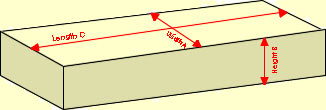
Measure the width of the bed.
Height
Measure the height of the bed from the floor to the surface of the bed. If you don’t want the throw touching the floor then deduct your desired amount, we recommend 2 cm.
Length
Measure the distance between the end of the bed and the headboard. If required add any extra to tuck under the pillow.
Bed runners
Width
Measure the width of the bed.
Height
Measure the height of the bed from the floor to the surface of the bed. If you don’t want the throw touching the floor then deduct your desired amount, we recommend 2 cm.
Length
Decide on the length required. Typically these will be 75cm, 100cm or 125cm, but you can have any size required.